


Derechos de Menores Arrestados en Georgia — Y Por Qué Usarlos Puede Cambiar el Futuro de Tu Hijo
11 August, 2026
Parents Arrested for Teen Drinking Party?
14 August, 2026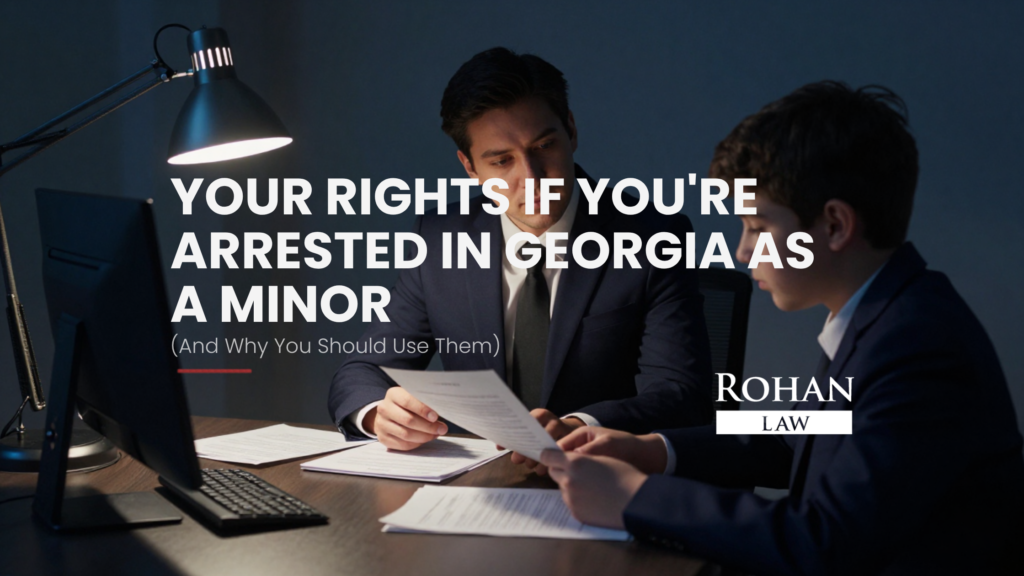
Your Rights If You’re Arrested in Georgia as a Minor — And Why You Should Use Every Single One of Them
Understanding the rights of minors arrested in Georgia can be the difference between a mistake that fades over time and a legal consequence that follows a young person for years. An arrest is frightening for anyone — but for a minor and their family, it can feel completely overwhelming. The legal system moves fast, and without the right information, young people and their parents often make decisions in those first critical hours that can hurt their case significantly. At Rohan Law, we believe that knowledge is protection. This guide is here to help you understand what rights Georgia law guarantees to minors who are arrested, why exercising those rights is not optional — it is essential — and how having an experienced legal advocate by your side makes all the difference.
How Georgia’s Juvenile Justice System Treats Minors Differently
Georgia law recognizes that children are not adults — and its legal system reflects that distinction. Under the Georgia Juvenile Code (O.C.G.A. Title 15, Chapter 11), minors under the age of 17 are generally handled through the juvenile court system rather than the adult criminal courts. The juvenile system is designed with rehabilitation in mind, not simply punishment. However, that does not mean the process is informal or that outcomes are automatically lenient. Certain serious offenses — including some felonies — can result in a minor being tried as an adult in Georgia’s Superior Court, which carries far more severe consequences. Whether your child faces juvenile or adult proceedings, their legal rights remain non-negotiable from the moment of arrest. Knowing those rights and acting on them immediately is the first and most important step a family can take.
The Right to Remain Silent — and Why Minors Must Use It
One of the most powerful rights of minors arrested in Georgia is the Fifth Amendment right to remain silent. Law enforcement officers are required to inform anyone they take into custody of their Miranda rights — including juveniles. This means your child has the legal right to say nothing beyond providing their basic identifying information. This right is not a sign of guilt. It is a constitutional protection that exists precisely because statements made under pressure, without legal counsel, are frequently misunderstood, misquoted, or used out of context. Young people are especially vulnerable in interrogation settings. Research consistently shows that minors are more likely to give false confessions or make incriminating statements when questioned alone by authority figures. The message is simple: a minor should never speak to police about the details of an incident without an attorney present. Period.
Rights of Minors Arrested in Georgia: The Right to Remain Silent
Every minor arrested in Georgia has the constitutional right to legal counsel. If a family cannot afford a private attorney, the court is required to appoint one. However, securing experienced legal representation as early as possible — before interrogation, before any hearings, and before any agreements are signed — can dramatically change the trajectory of a juvenile case. As our team at Rohan Law often reminds families, the moments immediately following an arrest are some of the most consequential in the entire legal process. An attorney can ensure that evidence is reviewed properly, that your child’s rights were not violated during the arrest or search, and that all available legal options are explored. It is critical for minors accused of a crime to obtain the services of a qualified attorney as quickly as possible — and that is a message our firm takes seriously every single day.
The Right to Have a Parent or Guardian Notified
When a minor is taken into custody in Georgia, law enforcement is required to make a reasonable attempt to notify the child’s parent or legal guardian promptly. This is not a courtesy — it is a legal obligation. Parents have the right to be present and informed, and they play a critical role in protecting their child’s interests during this process. If you are a parent and you have been notified that your child has been arrested, act quickly: do not wait, do not assume it will be handled informally, and do not allow your child to be questioned without legal representation present. Contacting an attorney immediately after receiving that call is one of the most protective actions a parent can take. The juvenile justice system in Georgia can move swiftly, and delays in securing legal counsel can have real consequences.
Protections Against Unlawful Search and Seizure
The Fourth Amendment protects everyone in the United States — including minors — from unreasonable searches and seizures. This means that law enforcement generally cannot search a minor’s person, belongings, vehicle, or home without a valid warrant or a recognized legal exception. If evidence was gathered through an unlawful search, a skilled attorney may be able to have that evidence suppressed — meaning it cannot be used against your child in court. This is one of the most powerful legal tools available in juvenile defense, and it is one that is frequently overlooked when families try to navigate these situations without professional guidance. Every detail of how an arrest was conducted matters. An experienced attorney will examine those details carefully and use every legitimate legal avenue to protect your child’s future. To see how we approach juvenile defense advocacy, follow Rohan Law on Instagram for ongoing legal insights and client advocacy updates.
The Right to a Fair Hearing and Potential Record Sealing
Minors in Georgia are entitled to a fair hearing before a juvenile court judge. Unlike adult criminal proceedings, juvenile hearings are generally not open to the public, which provides an additional layer of privacy protection for young people and their families. Furthermore, Georgia law allows for the sealing or restriction of juvenile records in many cases, meaning that a past arrest does not have to define a young person’s future. Under O.C.G.A. § 15-11-701, eligible individuals may petition the court to restrict access to their juvenile records, which can open doors that might otherwise remain permanently closed — to employment, education, housing, and military service. This outcome, however, is far more achievable with qualified legal representation than without it. The rights of minors arrested in Georgia are substantial — but they must be actively asserted and strategically defended.
Tip from Rohan Law:
“The moment your child is arrested is not the moment to wait and see — it is the moment to call an attorney, assert the right to remain silent, and let a qualified legal advocate protect everything that matters most about your child’s future.”
Protect the Rights of Your Minor Child — Contact Rohan Law Today
If your child has been arrested in Georgia, you do not have to face this alone — and you should not try to. The rights of minors arrested in Georgia are powerful, but only when they are exercised correctly and at the right time. At Rohan Law, founded by attorney Doug Rohan, we are committed to standing firmly in your corner from the very first phone call. We serve families across Atlanta and all of Georgia, and we are proud to offer bilingual legal support for our Spanish-speaking community — porque cada familia merece una defensa digna y justa. We understand the fear and urgency that comes with a child’s arrest, and our team is available to help you navigate every step of this process with clarity, compassion, and strategic legal skill. Call or text us 24/7 at (404) 647-0670, email us at info@rohanlawpc.com, or visit us online at www.rohanlawpc.com. Our office is located at 375 Northridge Rd Suite 120, Atlanta, GA 30350. Your child’s future is worth fighting for — and we are ready to fight.
Related posts