


¿Tu empleador puede obligarte a ir a su médico después de un accidente de trabajo en Georgia?
26 May, 2026
Golpe de Calor en el Trabajo en Georgia: Lo Que Tienes Derecho a Reclamar
2 June, 2026¿Tu empleador puede obligarte a ir a su médico después de un accidente de trabajo en Georgia?
26 May, 2026Golpe de Calor en el Trabajo en Georgia: Lo Que Tienes Derecho a Reclamar
2 June, 2026¿Tu empleador puede obligarte a ir a su médico después de un accidente de trabajo en Georgia?
26 May, 2026Golpe de Calor en el Trabajo en Georgia: Lo Que Tienes Derecho a Reclamar
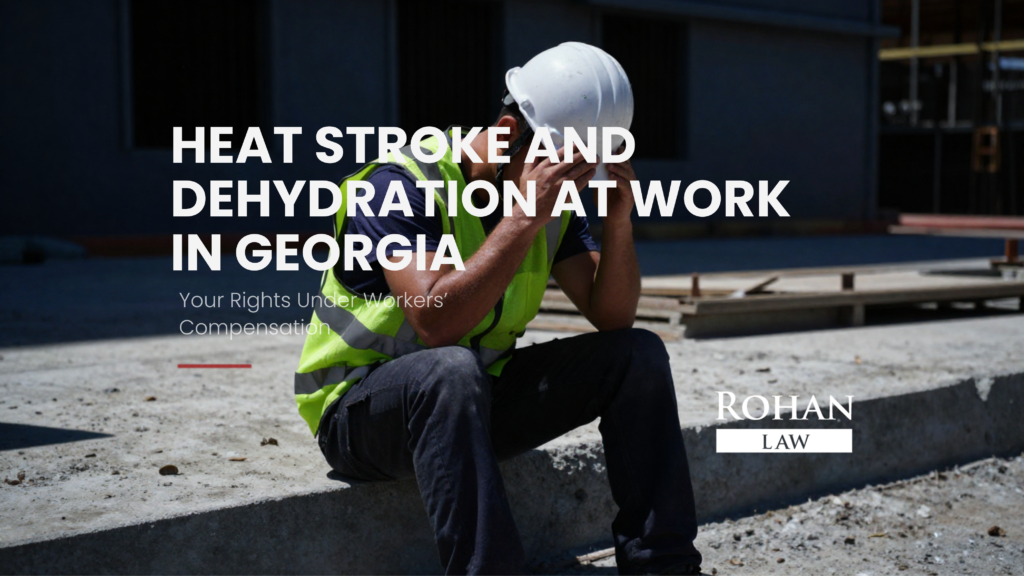
2 June, 2026Working outdoors or in high-temperature environments in Georgia can expose employees to serious health risks. While many people think of heat exhaustion or dehydration as temporary problems, the reality is that heat-related injuries can result in hospitalization, permanent health complications, and in severe cases, death. As temperatures continue to rise across Georgia, workers in construction, landscaping, manufacturing, warehousing, and other physically demanding industries face increasing dangers every summer. At Rohan Law, we frequently speak with workers who underestimated the seriousness of heat exposure until it began affecting their health, their ability to work, and their financial stability.
In many situations, the answer is yes. If a worker develops a heat-related condition because of workplace conditions, workers’ compensation benefits may be available. Heat exhaustion, heat stroke, severe dehydration, and other medical complications caused by excessive heat exposure can qualify as work-related injuries. The key issue is establishing a clear connection between the medical condition and the employee’s job duties or work environment.
Not every heat-related illness automatically qualifies for benefits. To have a valid workers’ compensation claim, the injury must be directly connected to the employee’s work activities or conditions. Construction workers spending long hours outdoors, laborers performing physically demanding tasks in extreme temperatures, and employees working in poorly ventilated indoor environments may all face circumstances that support a claim. Medical evidence and documentation are often critical in proving this connection.
Georgia’s hot climate has always presented challenges for workers, but rising temperatures and demanding work conditions have increased the number of heat-related incidents being reported. Employees in Atlanta, Marietta, and surrounding communities often work through long periods of extreme heat while performing physically intensive jobs. As awareness of workplace heat dangers grows, more workers are beginning to recognize that these injuries may qualify for compensation under Georgia law.
The actions taken immediately after symptoms appear can significantly impact a workers’ compensation claim. Workers should report the incident as soon as possible, seek medical treatment without delay, and preserve information about the work environment where the injury occurred. Waiting too long to report symptoms or obtain medical care can create questions about whether the condition was actually caused by work, making the claim more difficult to prove later.
Workers’ compensation benefits may include payment for medical treatment, wage replacement benefits when an employee cannot work, and compensation for permanent impairments resulting from the injury. The exact value of a claim depends on factors such as the severity of the condition, the length of recovery, future medical needs, and whether the injury creates long-term limitations that affect employment.
Heat-related injury cases can be more complicated than other workplace accidents because insurance companies often dispute the cause of the condition. They may argue that the illness was related to a pre-existing medical issue, occurred outside of work, or was not severe enough to qualify for benefits. Without strong medical evidence and clear documentation, injured workers may face unnecessary obstacles when seeking compensation.
Successful claims often depend on prompt medical treatment and consistent documentation. Medical records, witness statements, incident reports, weather conditions, and evidence of workplace exposure can all help establish that the injury was directly related to job duties. The more information available, the harder it becomes for insurance companies to challenge the claim.
Heat-related injury claims require more than simply proving that you became sick. Workers must often demonstrate exactly how workplace conditions caused or contributed to the condition. Strong evidence and proper documentation can make the difference between receiving benefits and having a claim denied.
Tip from Rohan Law:
“Heat-related injuries are often underestimated, but they can have serious long-term consequences.”
The sooner an injured worker understands how to document and protect a heat-related claim, the better the chances of securing the compensation needed for recovery.
If you are experiencing symptoms of heat exhaustion, dehydration, or heat stroke related to your job, do not assume the condition will resolve itself or that benefits will be automatically approved. Acting quickly, obtaining proper medical care, and understanding your rights can have a major impact on your case. At Rohan Law, we help injured workers build strong claims and protect their right to compensation under Georgia workers’ compensation law.
Contact Rohan Law today for a consultation. Call or text us 24/7 at (404) 620-2478, email us at info@rohanlawpc.com, or visit https://www.rohanlawpc.com. We are ready to help you protect your right to compensation.
Related posts